Understanding is the work
Notes on architecture in the age of coding agents: how teams read what they have, decide what should change, and verify what actually shipped.
Featured
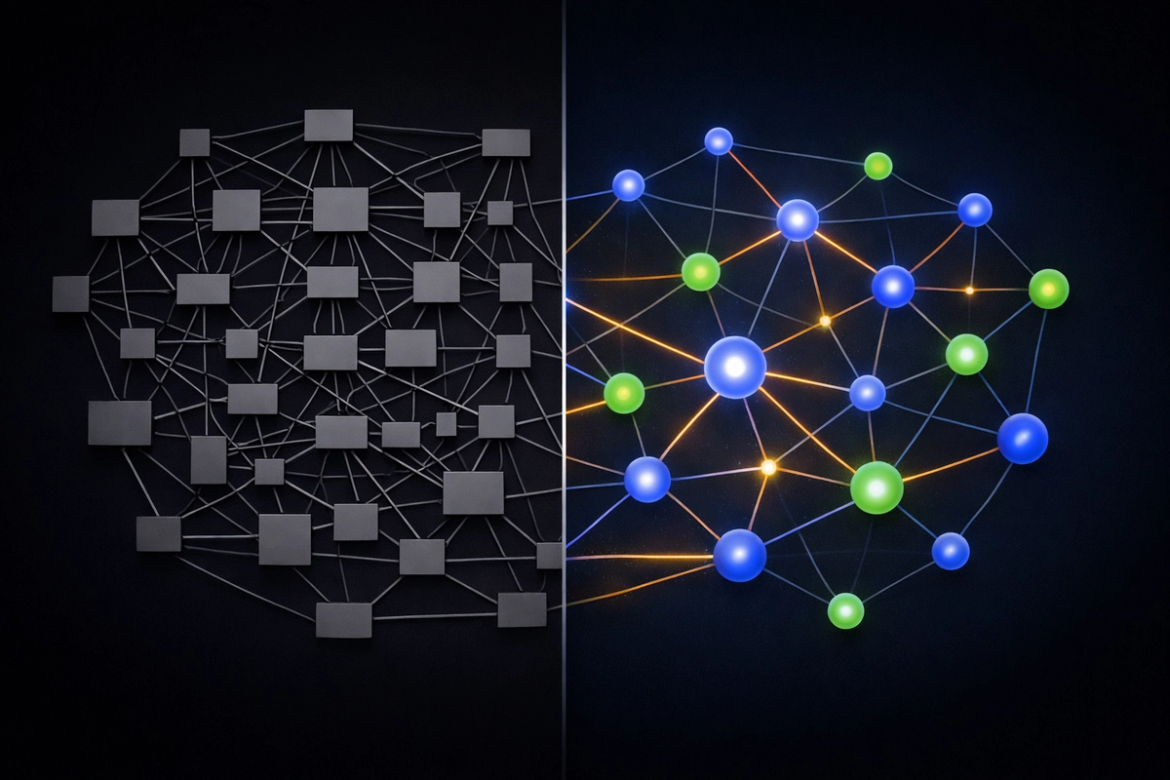

The decisions survive in the code. The reasoning dies in Slack.
Code preserves what was built. It does not preserve why. AI coding agents make this gap worse, not better - they read the artifact and not the input. The fix is not better diagrams or longer system prompts. It is keeping the reasoning alive next to the code it explains.


The Monolith vs Microservices Debate: What the Data Actually Says
Martin Fowler analyzed microservices adoption patterns and found something stark: almost all successful microservice stories started with a monolith that got too big. Almost all systems built as microservices from scratch ended up in serious trouble. Not "some." Almost all.
Why AI Creates Entirely New Software Categories
AI doesn't just improve existing software— it creates entirely new categories of problems that can be solved for the first time. Traditional enterprise tools were built for specialists. AI agents enable solutions accessible to everyone who needs them. The opportunity isn't "CRM but with AI." It's identifying professional services with no incumbent technology solution.
The Architect's Quiet Evolution: From Gatekeeper to Ecosystem Enabler
The software architecture community is undergoing a quiet revolution. Industry leaders report a fundamental shift from traditional "ivory tower" architects who control decisions from above, toward collaborative enablers who empower teams through coaching and guidance. This evolution isn't diminishing the architect's role—it's expanding their impact.
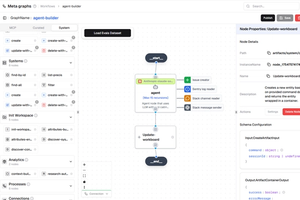
Why we cut our agent-workflow builder: understanding the system came first
An engineering retrospective from 2025. We prototyped a type-safe agent-workflow builder, then cut it — because the harder question turned out to be the simpler one: what is actually in my system, and what will this change break?

Everyone Is Becoming an Architect
AI made implementation cheap, so the bottleneck moved. The hard part is now deciding what should be built, how it fits the system you already have, and whether the result matched the intent — architectural judgment, increasingly done by people whose job title isn't architect.
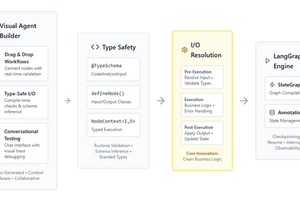
LangGraph + our abstraction: building ProvenMap's architectural intelligence agents
How we built type safety, human-AI collaboration, and visual workflow authoring by putting an explicit input/output resolution layer on top of LangGraph's state annotations — and the patterns that made composable, type-safe workflows possible.

Introducing ProvenMap — architecture for everyone
AI democratised building software. Now it's time to democratise understanding it — why architectural understanding should reach business analysts, product managers and developers, not just architects.
Syntaxia App Platform Ltd. Registered in England and Wales, company no. 15272701 Registered office: 3rd Floor, 86–90 Paul Street, London EC2A 4NE, United Kingdom contact@provenmap.com